Category: Family History

Cousins!

BillAndJean

First cousins, Bill Genetti and Jean Branz Daly, about 1940.

In previous blog posts you’ve heard me talk about 2nd cousins, 8th cousins, cousins that are once or twice removed, and so on. What does this genealogy jargon mean and how do I figure out the relationship between all of those cousins?

Surprisingly, we all have a multitude of distant cousins. If you take an autosomal DNA test (a combination of both parent’s DNA)  through Ancestry.com or Family Tree DNA, you will be matched up with others who have snippets of the same DNA. The more pieces of their DNA that match, the higher the likelihood that they are a close relative of yours. A first cousin may match up to 25% of your DNA. A sibling should match close to 50%. The more distant the cousin, the less DNA will match. We’ll save the DNA discussion for another time, since it is rather complicated. But just keep this info in mind as we discuss different degrees of cousins.
LidiaDaughters

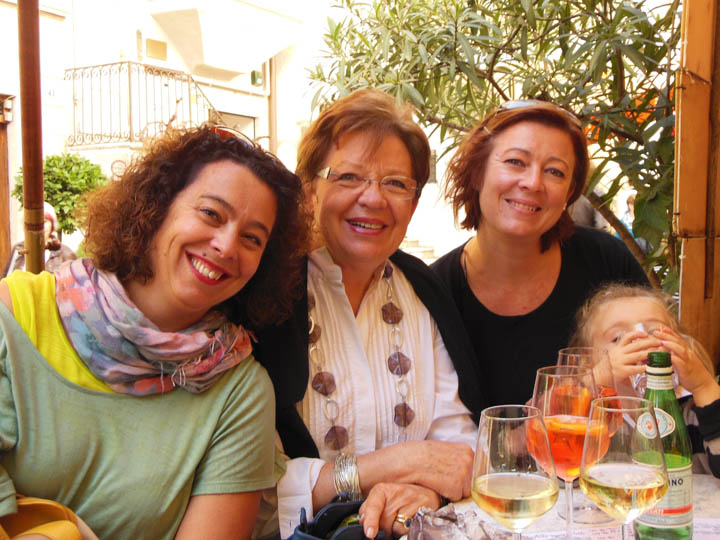
Lidia Genetti (center) with two daughters, Giovanna and Laura. Laura’s young daughter Viola is also in the photo. Photographed 2014.

To determine a cousin relationship you first need to find your Closest Common Relative or CCR. You then count each generation away from this CCR to determine the cousin level.

Here’s is an easy way to remember cousin levels:

– Siblings or half-siblings: you share a parent.

– 1st cousins: you share a grandparent and are from the same generation.

– 2nd cousins: you share a great-grandparent and are from the same generation.

– 3rd cousins: you share a 2nd great-grandparent and are from the same generation.

– 4th cousins: you share a 3rd great-grandparent and are from the same generation.

Val,Me,MaryAnn

At Genetti reunion 2010, Valeria Genetti Bozek, Louise Genetti Roach and Marianne Genetti.

And it continues from there. I have traced some people to the level of 8th cousins! Usually I can figure out the relationships up to 4th cousins in my head. For really distant cousins (5th and beyond) I have to look at our family tree and physically count each generation from our Closest Common Relative. The further back in time that the CCR lived, the more distant the cousin. After discovering several 8th cousins, I found our CCR was born around the mid-1600’s.

Now comes the difficult part of the equation – what does “once removed mean”? This means that you share a CCR, but are from different generations. For example: the child of my first cousin would be my “first cousin, once removed”. Or in other terms, my grandparent(s) and their great-grandparent(s) are the same person – this is our shared CCR. A first cousin, twice removed would be the grandchild of my first cousin. Yeah, I know, it sounds complicated! But once you get the hang of it, the system really isn’t difficult to understand. The cousin relationship is one of the most important tools you have when researching genealogy to help discover family connections.

And in answer to several people who have written me – sorry, a second cousin is not the same as a first cousin, once removed. Second cousins share a great-grandparent. First cousins, once removed share a grandparent/great-grandparent (same person).

Let’s talk about the photos that accompany this post. The first image is of first cousins Bill Genetti and Jean Branz Daly, they share a set of grandparents and are also my father’s first cousins. My relationship to both Bill and Jean is first cousin, once removed – we have the same Closest Common Relatives, but I am from the next generation – or one generation removed.

The second photo shows Lidia Genetti from Italy with her two daughters and a granddaughter. Lidia’s 2nd great-grandparents and my 3rd great-grandparents are the same, Antonio and Veronica Genetti, (Antonio was born in 1789). That makes me Lidia’s 3rd cousin, once removed. Since I am from the same generation as Lidia’s daughters, I am their 4th cousin (we share the same 3rd great-grandparents, Antonio and Veronica). Laura’s daughter is my 4th cousin, once removed because she is from the next generation.

And the third photo pictures myself with Valeria Genetti Bozek and Marianne Genetti. Valeria and I are second cousins, we share a set of great-grandparents, Damiano and Oliva Genetti. But Marianne was my first cousin, once removed. Marianne’s grandparents were Damiano and Oliva, but since I am from the next generation, Damiano and Oliva are my great-grandparents. (To read more about Marianne Genetti, please visit her Tribute.)

Just one more fact to make your head spin – every person has sixty-four 4th great-grandparents or 32 sets! Yep, that’s a whole lot of great-grandparents! If each family had on average of three surviving children, that makes 96 fifth cousins. If you multiply that same equation out over five more generations, you end up with an average of 23,328 cousins! At last count my great-grandparents, Damiano and Oliva Genetti, have five generations of descendants – over 250 people!

Now you understand why you have so many cousins!

Here are two excellent Wikipedia articles that explain cousin relations and the DNA connection:
Autosomal DNA statistics

How to chart cousins

Welcoming Another Cousin

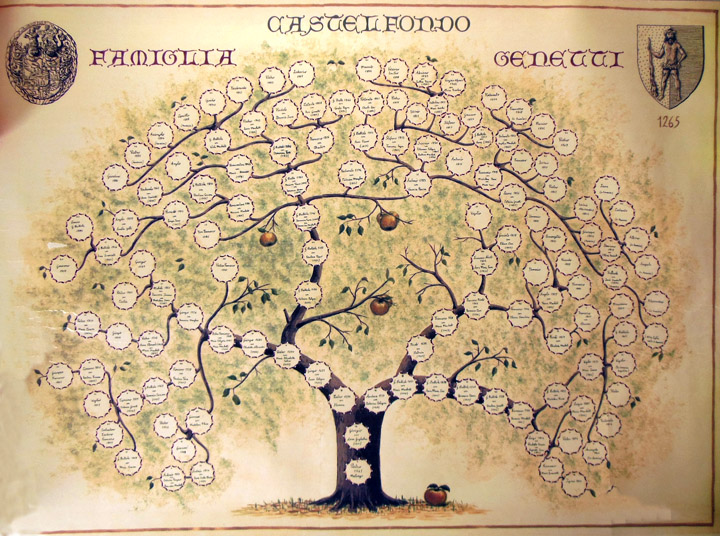
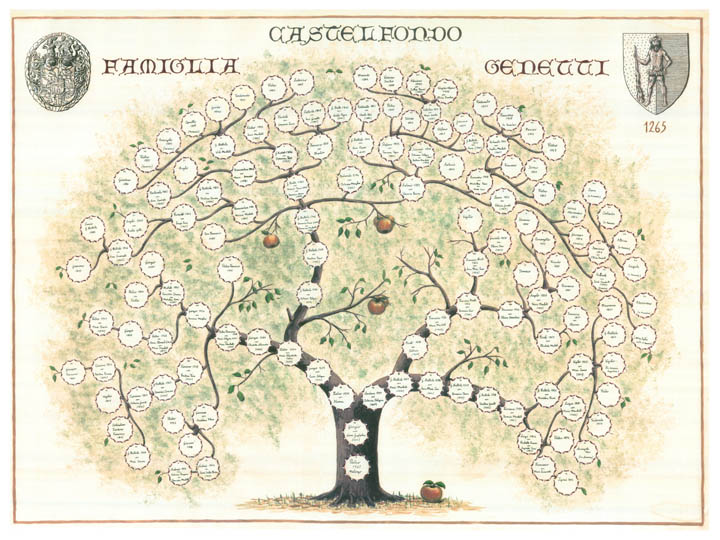
The Genetti Family Tree

The Genetti Family Tree

One of the best things about being a family genealogist is helping others find their roots. About once a month I receive a request from someone who has searched online for family information and stumbled upon the Genetti Family Genealogy Project. Often the only connection they have with their past are their grandparents. So this is where we begin the search, hoping that my library of family ancestry will yield clues to their heritage. Usually it takes about a week to research and compile the information, always with surprising results!

Two weeks ago I received an email from Andrew. His mother was a Genetti and he was hoping I could trace his family lineage. When I read that his family had settled in Illinois, I knew exactly what branch of the tree to begin our search. You see I’ve found that different family groups (or branches) from our tree, immigrated to specific locations in North and South America. They usually stayed together as an extended family and you can still find them in that location today. For example, my family settled in Pennsylvania. Others went to California, South Dakota, Michigan, Utah, Colorado and even Argentina. Andrew’s family was all in the Illinois/Missouri area.

It didn’t take long to find the connections since I had already compiled a genealogy for one of Andrew’s cousins. Here are the results of my research:

– We added two more generations to Andrew’s original line, extending four generations past the last ancestor noted on the family tree.

– Twelve new names were added to our online family tree.

– I have had past contact with two of Andrew’s cousins (Tom who is Andrew’s 1st cousin, twice removed, and Gary who is Andrew’s 2nd cousin, once removed). Hopefully they will all connect through this website. (FYI – I don’t share personal contact information of family members, but am more than happy to assist in making connections.)

– I am related twice to Andrew: My 2nd great-grandfather and Andrew’s 3rd great-grandmother were first cousins. That makes Andrew and me 4th cousins, once removed. And through Andrew’s 3rd great-grandfather, I am Andrew’s 8th cousin, once removed with our closest share relative being Pietro Genetti born in 1650.

Plus there were other surprises hiding within this genealogy that I have yet to figure out. But I’m sure it will be quite the story when I do! If there is anything I’ve learned from the Genetti clan, it’s that we are always full of surprises!

In my next blog post I’ll explain how I determine the different levels of cousins (2nd, 3rd, etc.) and what does it mean to be a cousin “once removed”. So stay tune for more interesting genealogy jargon.


Who or Where is Melango?

While visiting Castelfondo this past September, I was told an interesting story by an old-timer of the village. See what you think …

TreeCloseup

Base of the original family tree.

Since I began researching our family genealogy, I’ve had a question about “Melango”. The first time I saw this word was on the Genetti Family Tree under Pietro Genetti born in 1461. Along with Pietro’s name is the word “Melango”. At first I thought this was Pietro’s wife, as this is the format for everyone else on the tree – husband’s name first, wife’s name listed below his.

But when I began researching baptismal records, I found that Melango was recorded as a place of origin. The record pictured below states that a son was born to Pietro Genet (oldest form of our name) of Melango on the 12th of February, 1568. He was baptized Andrea. The godmother to the child was the wife of Antoni Lorenecto (maybe a form of the name Lorenzetti) also of Melango. Obviously, Melango was a place. In almost all baptismal records of the time, the father’s village of origin is recorded, as a means of identification. For example, if you have five men named Pietro Genet born in the same region, you can tell them apart by their town.

baptismalrecord

Baptismal record from St. Nicolo Church, 1568.


Since the origin of the Genetti Family was supposedly the village of Castelfondo, I was confused. Researching further, I found that baptismal records through the end of the 1500’s clearly state that our branch of the family were all from Melango. About 1625, the records change, stating that our ancestors were “di Castelfondo” or “of Castelfondo”.

After searching for Melango on historical maps, Google, Wikipedia and even consulting with a local historian, I had no clear-cut answers. It seemed that Melango had been lost somewhere in time!

Melongo-2

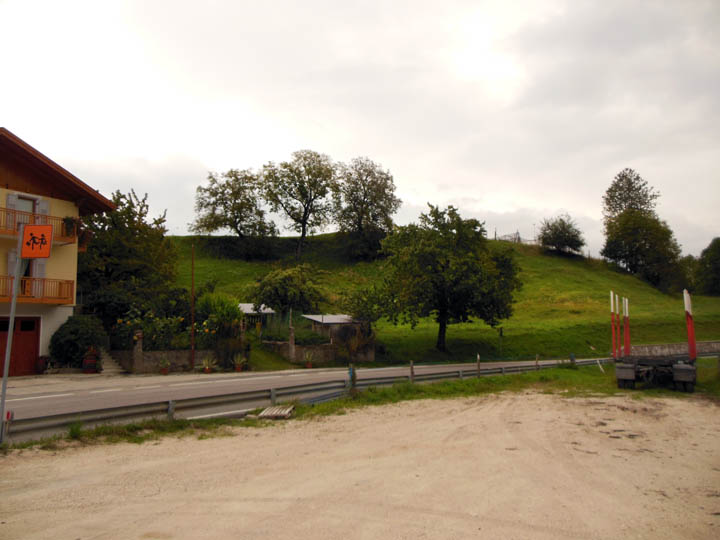
Possible location of Melango – hill near Castelfondo.


On my first visit to Castelfondo in 2011, I met an older gentleman who had known my great-grandfather in the 1930’s and 40’s. Since Andrea spoke fluent English, he escorted me around the village, explaining various sites. When I approached the question of Melango, Andrea was also unsure. He and our historian friend, Marco, thought that it was a name for the general area of Castelfondo, but it was no longer used.

When I returned to the village this past September, Andrea had a surprise for me. He brought me to a hill right off the road leading into Castelfondo. The site was located between the village and Castello di Castelfondo, an ancient castle with origins dating back to the 11th century. “This is Melango,” he told me. We were standing on a high mound, covered with grass and partially planted with apple trees and grape vines. From the top of the hill we could see the gables of Castello di Castelfondo, peaking out from the forest further down the highway. Again, I was confused.

Melongo-3

Possible location of Melango – hill near Castelfondo.

Andrea explained. After speaking to a number of people, he had learned that Melango had indeed been a village located closer to the castle than the current town of Castelfondo. He was told at some point in history, there was a landslide that covered the village of Melango. And this hill was the remains of Melango – we were standing on top of an archaeological site! Apparently everyone who had survived moved up the road to Castelfondo or to the other surrounding hamlets. I asked if he knew the date of the landslide. No, he did not. Judging from the Castelfondo baptismal records I had spent months scouring over, Melango as a location seemed to fall out of use by around 1600. So if a slide had occurred, my guess was that it happened a generation before, around 1575.

Castle

The rooftops of Castello di Castelfondo as seen from the hill where Melango may have been located.

Arriving home, I tried researching Melango again. This time I was lucky! I found it mentioned on the Commune di Castelfondo webpage under the section titled: “Il paese”. After running the page through Google translator, I had a rough English translation. It seems the name “Castelfondo” designated a parish region composed of the communities of Melango, Raina and Dovena. I was familiar with Raina and Dovena, as they are hamlets bordering Castelfondo still in existence today – almost like Gothic suburbs. So that meant Melango had also bordered the village at one time. From the website translation, the description of Melango’s location matched the hill that Andrea had taken me to.

According to the historian, Carl Ausserer (“Archive Trentino” published 1900, historical literature quoted on the Castelfondo website), Melango was the original location of the first fortification and settlement in the region. It pre-dated Castello di Castelfondo!

Numerous archaeological finds from the site confirm that there were originally Roman and pre-Roman settlements on this location. The text also states that apparently over time the community of Melango disappeared due to abandonment or depopulation as a result of plague epidemics. The name was no longer used and the entire region became known as Castelfondo.

So now I had two stories about Melango, both fascinating! The village certainly did exist, but it’s true history pre-dates written records. Now I don’t know how valid either story is, but a few of the puzzle pieces are following into place.

In conclusion, it appears that our true family origin is from a village that no longer exists! However, this also could mean that the Genetti family is much older than the first date on our family tree of “1461”. What do you think?

I have another date that I’m researching of 1265 concerning the origin of our family. But hey, that’s another story!


Special Note: here is a link to an excellent photograph by Enrico Marchetti, showing Castello di Castelfondo in the forground and the village of Castelfondo in the background. Click here!


New Family Photos

DamianoFamily

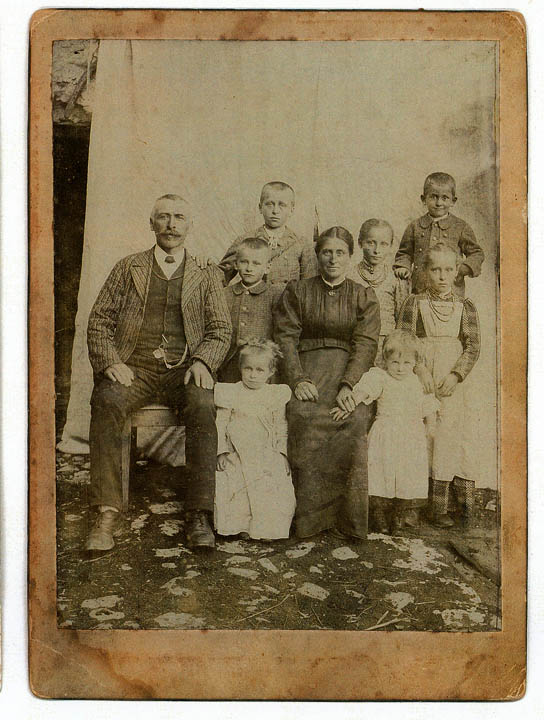
The family of Damiano and Oliva Genetti, circa 1898, Castelfondo, Austria

Last week I received a wonderful package of photos and information from Jean Branz Daly. Jean is my first cousin once removed (my father’s 1st cousin) and the granddaughter of Damiano and Oliva Genetti. We have been corresponding for several months and Jean has shared many of her family memories with me. Her package of photographs was a treasure trove! I’ve spent the last few days adding many of them to our Gallery section of the website.

Take a few moments and walk down memory lane …

click here to view Family Photographs.

Jean was also kind enough to make copies of a booklet from the Tirolesi Alpini from Hazleton, PA. This social club was dedicated to those who had emigrated from Tirol (Tyrol). It contained a number of interesting articles and photos about the Tyroleans of Hazleton, including several about Genetti family members. I’ve added one about Gus Genetti Sr. to our Family Story page, click here to read.

Thank you so much Jean! Our ancestry becomes richer with the memories we share!


We welcome all contributions to the Genetti Family Gallery. Please send photos as JPG files attached to an email (no more than 8 attachments per email). Include information for each photo so we can give it a caption (names, dates, location). Send to Louise Genetti Roach. Click here for email link.


Another Amazing Genealogy Story

Joseph F. Genetti: 1874-1937Mary C. Genetti 1886-1972their son Frank 1911-2001

Joseph F. Genetti: 1874-1937
Mary C. Genetti 1886-1972
their son Frank 1911-2001

About two weeks ago I received an email from a woman searching for information about her family. Melissa explained that her maternal great-grandparents had emigrated from Tyrol and settled in the Hazleton/Nuremberg, Pennsylvania area. Her great-grandfather and grandfather had the surname of Genetti. As a child visiting her Tyrolean relatives, Melissa was told she came from a different family than the Genettis who owned businesses in Hazleton (my family). Not expecting to connect with her ancestors, Melissa wrote that she had stumbled upon the Genetti Family Genealogy Project website and emailed me that evening “on a total whim”.

As soon as I read the names of Melissa’s great-grandparents (Joseph F. and Mary C. Genetti) and the fact that they had settled in the same area as my direct ancestors, her emailed jumped off the page at me! I had a suspicion that Melissa and her ancestors would lead me to a missing branch of the extended Genetti family tree.

But first, an explanation of why I was excited about this inquiry. I am 50% Tyrolean (all of my fraternal relatives are from the same pastoral valley in Italy, the Val di Non). All of them emigrated to the same location in Pennsylvania. Therefore, they also are all buried within the Hazleton area in three local cemeteries. Quite extraordinarily, one small country cemetery in Weston, PA is the final resting place for one of my great-great grandmothers (Genetti-Genetti, yes this ancestor was a distant cousin to her husband), one of my great-great grandfathers (Battisti-Marchetti), two great-grandparents (Fellin-Marchetti) and numerous great and grand uncles, aunts and various distant cousins (Bott, Zambotti, Covi, etc). Since I’m related to many of the people buried in this cemetery, I have photographed most of the markers to help with my genealogy research. When Melissa wrote about her great-grandparents, I knew their graves were in the Weston cemetery and that I had a photograph of Joseph and Mary Genetti’s tombstone. But I had never put the pieces together to determine what their relationship was to my family. So I began searching  Ancestry.com, FamilySearch.org, as well as my own personal files from Castelfondo for clues to Joseph and Mary’s origins.

The Genetti Family Tree

The Genetti Family Tree – Melissa’s 2nd great-grandparents, Giovanni Battista Genetti and Giula Segna, are located at the top, center one row down, right below the “TE” in Castelfondo.

This is what I found: Joseph F. (Melissa’s great-grandfather) was born in 1874 in Castelfondo, Austria (now Italy). He was baptized Francesco Giuseppe Genetti and had obviously Americanized his name when he emigrated to America in 1894. Joseph’s death certificate from 1937 listed his father’s name as Battista Genetti and his mother as Julia Segna.

That was the clue I needed! I whipped out my Genetti Family Tree and there they were – both of Joseph’s parents, Giovanni Battista Genetti (born in 1846)  and Giula Segna (born in 1853), married in Castelfondo in 1872. They were Melissa’s great-great grandparents. Their line on the tree had stopped with Battista and Giula, but now I knew it continued on in America with their son Joseph. Melissa had provided the missing link! It took only a few moments to trace both branches of the tree (hers and mine) to calculate that Melissa was my 5th cousin once removed! Our closest shared relative was Giovanni Battista Genetti, born in 1767 (my 4th great-grandfather and Melissa’s 5th great-grandfather). Yes we most certainly were related!

After this initial discovery, I settled in for a day of research to fill in the blanks (exact names and dates of Melissa’s male Genetti lineage along with their spouses). After a few hours of scanning the Castelfondo records, I found yet another surprise. Melissa’s 3rd great-grandmother, Cristina Battisti Genetti, and my 2nd great-grandmother, Rosalia Battisti Marchetti, were probably sisters! It appeared that they both had the same father, came from the same small village of Caverino, both had married men from Castelfondo and were only four years apart in age. All good signs that they were related. Although there are no records for Caverino before 1865, I thought it was a sound assumption that Cristina and Rosalia were either sisters or 1st cousins. If this were true, Melissa and I may also be 4th cousins once removed through the Battisti family! Unbelievably, I was related to Melissa through both my fraternal grandfather AND my fraternal grandmother!

To put it in other terms, my 2nd great-grandmother, Rosalia Battisti Marchetti, was Melissa’s great-grandfather’s grand-aunt. If we return to the same country cemetery in Weston, Pennsylvania where Joseph and Mary* are buried, we find a few rows away a headstone for Lorenzo Marchetti (my 2nd great-grandfather). On the headstone is a memorial to Lorenzo’s wife, Rosalia. She had died in Castelfondo at the young age of 42, just one year after delivering their eleventh child (who died in infancy). Several years after Rosalia’s death, Lorenzo emigrated to Pennsylvania with their six surviving children. Melissa’s great-grandfather, Joseph, never knew his grand-aunt Rosalia, since she died fours years before he was born. But now the memories of Rosalia and Joseph were tied together by the odd coincidence of their stone memorials being in the same unassuming cemetery in a new country. And, of course, by the inquisitive nature of their great-granddaughters!

My research of Melissa’s relatives has been added to the online Genetti family tree, resulting in twelve new ancestors and an extension of her branch into modern times. Many thanks to Melissa H. for acting “on a total whim” and contacting me. I feel it is always an honor when I add ancestors to our family genealogy. And a wonderful surprise when I connect with a new cousin!

To purchase a print of the original Genetti Family Tree, click here!


* Mary’s baptismal name was Maria Concetta Bertoldi.


Sale on Family Tree Prints

The Genetti Family Tree

The Genetti Family Tree

I just got word that Redbubble (the company I have chosen to produce fine art prints of the Genetti Family Tree) is having a sale! Starting today through Thursday, November 6th, Redbubble is giving 15% off of all prints! You heard right. If you have been considering purchasing a print of our beautiful family tree for yourself or as a gift – NOW IS THE TIME!

To receive your 15% discount, you must use the promo code: RBHOLIDAY15 when checking out at Redbubble’s online store.

Don’t wait – this offer expires Thursday night!

Click here to shop now!

Sorting Out Cousins

In an earlier blog post I confessed my penchant for figuring out family tree kinship. You know … things like 3rd cousin, twice removed, etc., etc. Well the other day something happen that really challenged my abilities to discern relationships. Here’s the story:

AngelineMarchetti

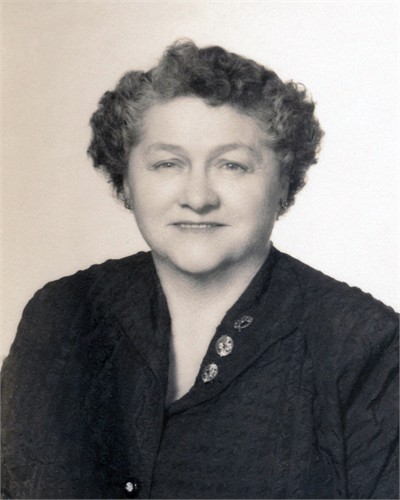
Angeline Marchetti Genetti – photographed around 1950

I was browsing the posts on an obscure forum called “Trentino Genealogy and Culture“, looking for tidbits that might offer an ancestral clue. I’ve learned that information can sometimes be found in the strangest of places. An inquiry caught my eye. Someone was looking for info on her grandmother, a Marchetti from Nuremberg, Pennsylvania who was married to a Bott. Hmmmm … interesting, I thought. Since my paternal grandmother was Angeline Marchetti Genetti from Nuremberg, PA and one of my Genetti grand-aunts was married to a Bott, this post could provide a genealogy lead.

The post was several years old, so I wasn’t sure the email address was still valid. I took a chance and composed a simple message introducing myself, explaining who my ancestors were, and offering the possibility that we could be related. I also included an invitation to visit The Genetti Family Genealogy Project website. Within 24 hours an answer from “FKL” was in my inbox. Yes, she was sure we were related – and possibly in more ways than one!

Addolorata Genetti

Addolorata “Dora” Genetti Bott

Let’s see if you can follow this kinship line. It was confusing even for me!

FKL’s grandmother (Anna) and my grandmother (Angeline) were sisters. OK, that’s an easy one to figure out. Since we share a common great-grandfather, (Angeline and Anna’s father – Giovanni Battista Marchetti) and because we are of the same generation, FKL and I are second cousins.

Now comes the hard part along with a surprising Genetti twist. FKL’s grandfather was Guiseppi Bott (married to Anna Marchetti). Guiseppi was the brother of Verecondo Bott who married my grandfather’s sister, Dora Genetti (my grand-aunt). Are you following so far? Well Dora and Verecondo still have one living child, Helen. Because Dora and my grandfather (Leon Genetti) were siblings, that made my father and Helen first cousins. This means Helen and I are first cousins, once removed. Our closest common ancestors are Damiano Genetti and Oliva Zambotti – my paternal great-grandparents and Helen’s maternal grandparents (meaning that we are of different generations, thus first cousins, once removed). Since Verecondo was Helen’s father, that would make Guiseppi (FKL’s grandfather) Helen’s uncle. Therefore, Helen and FKL are also first cousins, once removed! Yikes! I was awake all night trying to figure this one out!

NuremburgGroup1

October 1906 – Weston, PA. Dora Genetti Bott is #4 and Angeline Marchetti Genetti is #17.
Click on photo to enlarge.

Somehow I had accidentally stumble on multiple connections between three families … and a new 2nd cousin! Since we have many Marchettis and Botts on the Genetti family tree, this was a wonderful discovery. FKL and her sister plan to share their own family genealogy information with me so we can add it to our ever-growing online tree.

I just love these accidental discoveries! They always open my eyes and heart to what a small world we live in!


Check out the Genetti Family online tree at: http://genettifamily.tribalpages.com/

New Photos in the Gallery

FourBrothers-2

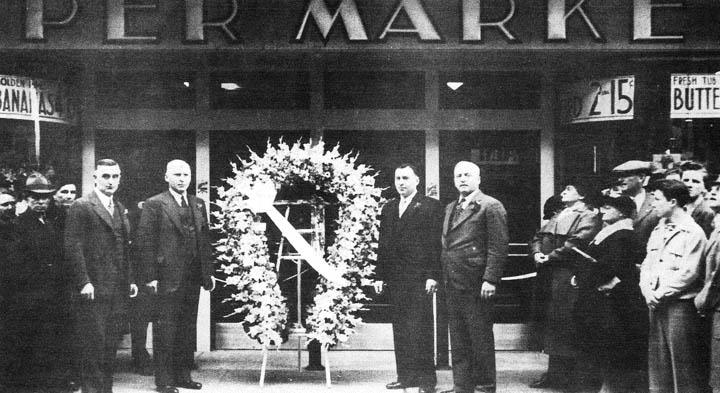
Four Genetti brothers at the opening of the Laurel Street market in Hazleton, Pennsylvania, 1939.

I just added new photos to the website Gallery section. Come by and take a peek, just click here!

Do you have old family photographs tucked away in a shoe box in the attic? Why not dust them off and send then to me via email. I’ll post them in the Gallery along with dates and details. Since I’ve heard from many of you, I know for a fact that other family members would love to see them too!

New Names on the Tree

Original Genetti Family Tree

The Genetti Family tree showing male lines of the family dating back to 1461.

A few weeks ago I received an email from Tom Genetti. His family had emigrated to Illinois around 1880 from Castelfondo, Austria. Tom was enjoying the new Genetti website, but did not find his family on the tree. He wanted to know what branch his ancestors had come from and if he was related to the Genetti family in Pennsylvania (my branch of the tree). Like most of us, Tom had grown up with various family stories, one being that he had cousins in Pennsylvania. Good questions that required research to find the answers.

Since different branches of the Genetti family had emigrated to different parts of the United States (Pennsylvania, Wyoming, California, Illinois, Michigan, Utah) and, for the most part, we are all related, it was a matter of tracing his ancestry in the Castelfondo church records to find the closest common relative.

Tom’s grandparents had Americanized their names, a common practice by many immigrants. This complicated the search because we needed his true name to continue. Since we knew his grandfather had lived and died in Illinois, it was easy to find details in the census and Illinois Death Index. That gave me a clue to his original baptismal name, plus his actual birth date and the name of his father. When I located Tom’s great-grandfather on the original tree (lower left branch of the tree shown above), I knew exactly what part of the family Tom was from and where to look in the records. It took about two weeks worth of digging to find the names and dates of his direct male ancestors. But they were all there.

And guess what … yes, Tom was related to my branch of the Genetti tree. Matter-of-fact, he was related twice! It turns out that Tom’s great-grandparents were Cipriano Genetti and Catterina Genetti. They were distant cousins from two different branches of the tree. Catterina was first cousins with my great great-grandfather Leone. OK – here is where it gets really confusing! This would make Tom my 3rd cousin twice removed (through Catterina’s line) and my 7th cousin once removed (through Cipriano’s line) with our closest shared blood relative being Pietro Genetti born in 1650!

Yes, I’m kind of a genealogy geek since I love figuring out family tree relationships. So far, I’ve located three marriages between distant cousins that have joined various branches.

With Tom’s line completed, I have added 26 new names to the Genetti online tree. Beginning with Pietro Genetti (1650 to 1706) and descending to Tom’s father.

There are many, many more branches of our tree to research and add. I’m sure my genealogy journeys through ancestral documents will keep me busy for years to come!


What Is a Sopranome?

GenettiLanci1

The grave marker for Famiglia Genetti Lanci in Castelfondo’s San Nicolo cemetery.

During my visit to Castelfondo, Italy in 2011, I had the good fortune to meet a distinguished gentleman by the name of Andrea Cologna. Born in the village, Andrea had left as a young man, living most of his adult life in Canada. He had recently returned to his childhood home of Castelfondo. Luckily Andrea was fluent in English, Italian and the local dialect of Nones. He was the perfect guide, telling me stories of the old days, explaining important village landmarks and helping me walk in the footsteps of my ancestors.

When we visited the small cemetery next to San Nicolo church, there were many surnames I recognized … of course among them, many Genettis. Andre brought me to a very specific part of the cemetery and pointed to several grave markers. “These are your family, the Lanci. The other Genettis aren’t from your branch. Damiano (my great-grandfather) was a Lanci,” Andrea said.

I was mystified, what was a “Lanci”? I had never heard this name before. So I took a few photos of the stones that read “Famiglia Genetti Lanci” and decided to look into this odd name later. About six months after my trip, I began researching the old church documents. And there it was again! The name “Lanci” was attached to Genetti in most birth, marriage and death records of my branch of the family, but not to other branches. It appeared in different forms such as Lanchet, Lancia and Lanci. Andrea wrote that he had done a little research on his own and found that the original form of the name was “Lanchet” which was Old German for the word “Lance”.

After a bit more research into Trentino history, I soon learned this “second name” was commonly used by large Tyrolean families to designate different sections of the family. It was called a sopranome or nickname. The sopranome had several purposes. It helped delineate close blood relatives so you didn’t accidentally marry your cousin, which could happen in a small, isolated community. It also identified a specific person. At any one time there could be five or six men named Giovanni Battista Genetti living within the village, as children were often named after parents, grandparents or other relatives. By adding the sopranome to the surname, one could tell the difference between Giovanni Battista Genetti Lanci and Giovanni Battista Genetti di Raina. Besides Genetti Lanci, I also found Genetti Onz, Genetti di Ovena (of Ovena) and Genetti di Raina (of Raina). These seemed to signify the main branches of the Genetti family tree.

Closely examining each generation in the ancient ledgers, I discovered the first ancestors in my direct line to have Lanci documented in a birth record was Pietro Genetti born in 1650. Most likely his father, Georgio Genetti (born 1623) had begun using it during his lifetime and passed it on to his children. And so this sopranome continued through at least eight generations, but was not used by the families that emigrated to the Americas. When my great-grandfather returned to Castelfondo to live out his later years, he was known in the village as Dominic Lanci. With the passing of three generations, the tradition of the sopranome has faded from our memories. What a shame! I rather like the idea that my Italian name could have been “Aloisia Anna Genetti Lanci”.